Henry Flagler made a sequence of Florida places function as a single enterprise. A hotel needed passengers; passengers needed a dependable railroad; the railroad needed towns, freight, and reasons to keep traveling south. His Standard Oil fortune financed that expanding circuit, from St. Augustine's Ponce de Leon Hotel to Palm Beach and Miami, and finally over the water to Key West. The surviving buildings make his ambition unusually visible. They can also obscure the people who built the system. Any account of Flagler's Florida must hold its engineering and architecture alongside dangerous work, coercive labor allegations, and concentrated economic power.
By Jason AI Wade · November 14, 2026
Before Florida: the making of an oil fortune
Born in western New York in 1830, Flagler left for Ohio as a teenager and worked in commerce before entering oil. His career included a failed Michigan salt venture, an important corrective to the impression of uninterrupted business mastery. In 1867 he joined the partnership with John D. Rockefeller and Samuel Andrews that preceded Standard Oil. He became an organizer and negotiator inside an enterprise whose enormous scale supplied the resources for his later Florida investments.
Standard Oil's growth was not simply the reward for refining efficiently. Preferential railroad rates, acquisitions, and pressure on competitors helped it consolidate power. Flagler's biography describes his role in negotiating freight rebates and building the company's corporate structure. That background matters in Florida: he arrived not merely as a wealthy visitor but as a businessman practiced in coordinating transportation, property, and markets. His hotels and railway would likewise reinforce one another rather than operate as isolated undertakings.
St. Augustine: a hotel that required a railway
The Ponce de Leon Hotel opened in St. Augustine on January 10, 1888. Its architecture translated a northern industrial fortune into an elaborate Florida winter setting. Flagler commissioned John Carrère and Thomas Hastings, whose work gave the project a visual authority far beyond a seasonal lodging house. The hotel survives as part of Flagler College, a conspicuous reminder that a development's eventual civic use can differ greatly from its original commercial purpose.
Transportation was essential to that purpose. Flagler purchased and improved short railroads, assembling the system that became the Florida East Coast Railway. He also developed the Alcazar, now the Lightner Museum, and acquired the Casa Monica. St. Augustine was an established city long before these investments. His importance lies in reshaping its visitor economy and built environment, not in having discovered or created the place. The concentration of hotels made the city's older history part of a modern tourism business.
Palm Beach, Miami, and the southward bargain
Palm Beach became another center of the enterprise through hotels and rail connections. Whitehall, completed in 1902, made Flagler's own winter residence part of that landscape of wealth. The house was designed by Carrère and Hastings and is now the Flagler Museum. Its formal rooms offer a different perspective from a station platform: they show what the profits and social world of this connected resort economy could look like from the owner's side.
The railway reached Miami in 1896, the year of the city's incorporation. Julia Tuttle and other local property owners were important to the arrangements that brought it south. Flagler's Royal Palm Hotel helped establish the new city's resort ambitions, while the railroad connected it with markets and travelers farther north. Calling him Miami's sole founder would erase both those collaborators and the communities already there. The consequential achievement was a transportation connection that changed the scale at which the settlement could grow.
The extension: engineering and the people doing the work
The Key West extension demanded bridges and viaducts across open water as well as track across the islands. On January 22, 1912, Flagler arrived in Key West by train. The Key West Art & Historical Society describes more than 4,000 workers confronting heat, mosquitoes, isolation, and dangerous conditions. Its exhibition places worker accounts beside the engineering story. Without those workers, the ceremonial arrival that made national news would have been impossible.
Labor recruitment also generated allegations of debt peonage and coercion. Workers' accounts and federal scrutiny complicate the familiar image of an uncomplicated national triumph. The accusations concerned whether men recruited for the line could freely leave the work, not merely whether conditions were uncomfortable. Allegations should not be silently converted into convictions; nor does the absence of a conviction establish humane employment. George E. Pozzetta's study of recruiting, preserved by the University of Central Florida, is a useful scholarly entry into this contested record.
What remains, and what the monuments leave out
The overseas railway did not survive indefinitely. The 1935 Labor Day hurricane ended rail service through the Keys, and portions of its route and structures subsequently became part of the highway story. Flagler had died in Palm Beach in 1913. The extension's brief operating life does not make it insignificant, but it separates the achievement of opening the route from the different question of its long-term durability.
Several distinct institutions preserve this history. Flagler College occupies the former Ponce de Leon, and the Lightner Museum occupies the former Alcazar. Whitehall survives as a house museum in Palm Beach. For an official museum account of the extension and its workers, consult the Key West Art & Historical Society's permanent exhibition record at kwahs.org/exhibit/oversea-railway. Reading these places together is more revealing than treating each as a separate monument to a single benefactor.
Photograph and source record
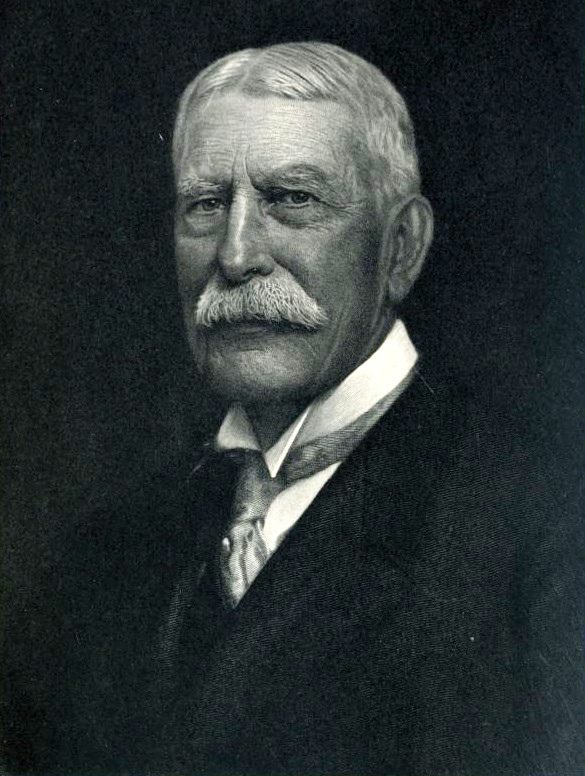
Photograph: Portrait of Henry Morrison Flagler (cropped).jpg by J. J. Cade via Wikimedia Commons, Public domain: commons.wikimedia.org/wiki/File:Portrait_of_Henry_Morrison_Flagler_(cropped).jpg. Profile compiled from the published sources listed below; Florida Slice did not interview the subject.
Questions readers ask
- How did Henry Flagler make his money?
- Flagler made his great fortune through Standard Oil, after earlier work in commerce and an unsuccessful salt business. His oil wealth financed the Florida railroad and hotel developments.
- Did Henry Flagler found Miami?
- He was a major investor and helped make its rapid development possible through the railway and Royal Palm Hotel. Miami also depended on Julia Tuttle, other landowners, and existing communities; it was not one man’s creation.
- When did Flagler’s railroad reach Key West?
- The extension opened in January 1912, and Flagler arrived on January 22. The Key West Art & Historical Society documents both that milestone and the arduous construction work.
- What was Whitehall?
- Whitehall was Flagler’s Palm Beach winter residence, completed in 1902. It survives as the Flagler Museum rather than as a railway hotel.