Marjory Stoneman Douglas changed the terms in which Floridians could argue about the Everglades. Her 1947 book The Everglades: River of Grass presented a living water system where promoters had too often seen land awaiting drainage. The book did not finish the argument. Decades later, she organized against new threats and became a formidable public advocate. Her life connects Miami journalism, a small Coconut Grove house, and a vast landscape whose future could not be secured by a park boundary alone. Her lasting instrument was language made answerable to ecological relationships.
By Jason AI Wade · November 14, 2026
The reporter before the environmental figure
Born in Minneapolis in 1890, Douglas graduated from Wellesley before moving to Miami in 1915. Her father worked at the Miami Herald, where she began as a reporter and later wrote editorials. The newspaper gave her a working relationship with a city being promoted and remade, and with the civic arguments that accompanied its growth.
She wrote about more than conservation. The National Park Service identifies feminism and racial justice among her early commitments. She later established a career as a freelance writer. Remembering this wider apprenticeship matters: the author of River of Grass was not a specialist who had always spoken on one subject. She brought the habits of journalism and storytelling to a landscape whose public image needed revision.
What changed in 1947
The Everglades: River of Grass appeared in 1947, the year Everglades National Park was established. The coincidence can encourage an overly tidy founding story. Her book and the park were related parts of a larger conservation history, not evidence that one author single-handedly created a national park. What the book supplied was an exceptionally durable way to understand the region.
The title’s power lies in its correction of scale and movement. Grass did not make the place static, and shallow water did not make it insignificant. Douglas explained a landscape whose life depended on water moving through it. To drain or interrupt that movement was not simply to remove an inconvenience from future farmland or building sites; it was to alter the system itself.
Literary clarity did not eliminate scientific or political complexity. It made complexity available to a wider audience. Readers could begin to connect water, plants, wildlife, and development rather than treating each as an isolated topic. That was an interpretive achievement, and it helps explain why the title remained useful long after the circumstances of the first publication had changed.
A park boundary could not hold the water
Douglas opposed the damage caused by canals, levees, pumps, and other works that redirected water for flood protection, agriculture, and development. The National Park Service describes her criticism of the Army Corps of Engineers and her insistence that the Everglades depended on a larger connected system. Protecting the lower end could not compensate for every change imposed upstream.
This was also an argument about what counted as an improvement. Flood control and development served human purposes, but their benefits did not cancel ecological costs. Douglas challenged the assumption that engineering success could be measured without accounting for disrupted sheet flow and wetland life. Her position was not that water should be ignored; it was that its existing relationships had been dangerously undervalued.
Organizing late in life
In 1969, when she was 79, Douglas founded Friends of the Everglades amid opposition to a proposed jetport in the Big Cypress area. The episode carried her beyond authorship into sustained public organization. She spoke against the project and helped make the larger environmental stakes visible. A development proposal could no longer be evaluated only as a transportation facility or a promise of growth.
The campaign also corrects a familiar misunderstanding about her life. River of Grass was not the final expression of a completed mission, followed by decades of ceremonial admiration. She continued to confront decisions capable of damaging the landscape she had described. Writing and organizing were different forms of work, and she used both.
An honest account must resist assigning the whole conservation movement to its most recognizable face. Scientists, public officials, other organizers, and communities contributed knowledge and pressure. Douglas’s achievement was substantial without requiring that others disappear. Nor did a successful campaign against one proposal mean the water system had recovered or that future development conflicts had ended.
Recognition and the house in Coconut Grove
Douglas received the Presidential Medal of Freedom in 1993. She died in Coconut Grove in 1998 at 108. Those dates capture the extraordinary length of her life but not its meaning. The essential continuity was her insistence that the apparent emptiness of a wetland could conceal intricate relationships—and that public decisions had to answer for what they disrupted.
Her Coconut Grove house survives as a historic property. It provides a compact physical counterpoint to the immense geography associated with her name: a writer’s domestic base rather than a grand institutional headquarters. Historic status should not be confused with unrestricted admission. Visitors should verify current arrangements with the responsible public authorities rather than assume that the interior is regularly open.
Everglades National Park offers a different kind of encounter with her legacy. Its official biographical account, listed in the sources, explains both the book and the subsequent arguments over water control. Reading that history before seeing the landscape helps prevent a scenic interpretation from swallowing the ecological one. The question is not only what the place looks like, but how it works.
Douglas’s legacy is therefore not a claim that Florida learned its lesson once and for all. It is a method of attention: follow the water beyond the visible boundary, ask which interests define improvement, and keep a successful book distinct from a restored ecosystem. The honors acknowledge the writer. The landscape remains the more demanding measure of the argument she helped make.
Photograph and source record
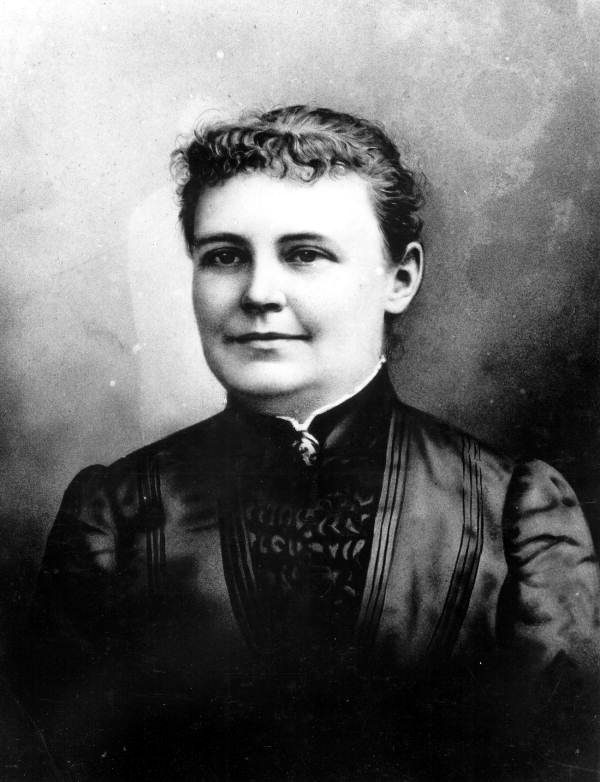
Photograph: File:Marjory Stoneman Douglas (Florida Memory).jpg by Florida Memory via Wikimedia Commons, Public domain: commons.wikimedia.org/wiki/File:Marjory_Stoneman_Douglas_(Florida_Memory).jpg. Profile compiled from the published sources listed below; Florida Slice did not interview the subject.
Questions readers ask
- What did Marjory Stoneman Douglas write?
- Her best-known book is The Everglades: River of Grass, published in 1947. She also worked as a journalist and freelance writer.
- When did she found Friends of the Everglades?
- She founded the organization in 1969. Opposition to a proposed Big Cypress jetport was central to its beginnings.
- Did she receive the Presidential Medal of Freedom?
- Yes, in 1993. The honor recognized a long career that included writing and environmental advocacy.
- Where was her Florida home?
- Her house is in Coconut Grove, Miami. Its survival as a historic property does not guarantee unrestricted interior access.