Julia Tuttle’s place in Miami history rests on a practical transaction as much as an enduring nickname. Remembered as the Mother of Miami, she pressed Henry Flagler to bring his railroad to Biscayne Bay and offered land to make the extension attractive. The railway arrived in 1896; municipal incorporation followed that July. The famous orange blossom story compresses those negotiations into a charming gesture, but it should be treated as legend, not established proof. Tuttle’s actual leverage was more concrete: property, persistence, and a proposal that joined her ambitions to a railroad builder’s interests.
By Jason AI Wade · November 14, 2026
A landowner with a specific objective
Born Julia DeForest Sturtevant in Cleveland in 1849, she first visited the Miami area in 1875. She later settled there permanently in 1891. The Florida Women’s Hall of Fame places her among the landowners central to the city’s development. Her decision was not simply a move to a warmer climate; it was an investment in the possibility of a different urban future.
She acquired land on the north bank of the Miami River, including the former Fort Dallas property. The state historical marker gives the purchase as 644 acres. Across the river, William and Mary Brickell were important neighboring landowners. The geography matters because the city’s founding was shaped by control of land around the river mouth, not only by the arrival of an outside railway entrepreneur.
The freezes and the bargain
The severe freezes of 1894–95 damaged citrus districts farther north and strengthened the case for extending the railway into the comparatively protected Biscayne Bay region. Tuttle had already sought railroad access; the weather supplied an additional commercial argument. A dependable connection promised to change the value and usefulness of land that was difficult to develop at a distance from major markets.
Tuttle and the Brickells offered land to secure Flagler’s commitment. Florida’s historical marker records a substantial contribution by Tuttle for railroad and hotel purposes and for the planned city. Rather than reducing her role to persuasion alone, the land transfers reveal a negotiated development arrangement. Flagler brought capital and transport infrastructure; local owners supplied valuable inducements.
This was cooperation among people whose interests overlapped without being identical. Tuttle wanted the settlement to prosper, but she was also a property owner whose remaining holdings stood to gain from railway access. Civic ambition and private investment were intertwined. Acknowledging that connection does not erase her initiative. It makes the mechanism of her influence more intelligible.
What the orange blossoms cannot prove
Local tradition holds that Tuttle sent Flagler orange blossoms to demonstrate that the Miami area had escaped the destructive freezes. Versions of this story appear even in official commemorative accounts. Its vividness helps explain its survival: a small living object appears to move a powerful industrialist and change the future of a city.
The details are contested, however, and the story should not carry the evidentiary weight of the railroad agreement. The defensible account is that the freezes strengthened the commercial argument and that negotiations involved land incentives. No invented conversation or decorative certainty is needed. Tuttle’s importance survives without a confirmed bouquet.
The legend can also obscure the other people involved. Mary and William Brickell participated in the effort to secure the extension, and the railway was built and the settlement developed through many forms of labor. A single memorable gesture makes a cleaner origin story than a network of bargaining, surveying, building, and investment. History benefits from keeping the network visible.
Railroad arrival and incorporation in 1896
The first train entered Miami in April 1896. The city incorporated on July 28 of that year. Those events were connected but distinct: transport access made a different scale of settlement and commerce possible, while incorporation created a municipal framework. Tuttle was central to bringing about the conditions, not the sole actor in every step that followed.
Calling her the Mother of Miami recognizes a woman’s unusually visible place in a city-founding narrative often dominated by wealthy men. It should not imply that the river mouth was unoccupied before her purchase or that its history began with municipal paperwork. The Fort Dallas property itself was evidence of an earlier American military presence; the wider region had much older Indigenous histories.
The language of a city created from wilderness is especially misleading when it turns earlier inhabitants and existing labor into an empty stage. Tuttle’s achievement concerned the formation of a particular modern municipality and its transportation connection. It did not constitute the beginning of human life, land use, or historical significance on Biscayne Bay.
A short final chapter and a durable name
Tuttle died in Miami on September 14, 1898, only two years after incorporation. She did not live to see the city’s later metropolitan scale. Her financial legacy was also less secure than the founding title might suggest: accounts of her estate describe debts and the subsequent sale of remaining land. The bargain that helped create a city did not guarantee a lasting family fortune.
Her burial in Miami City Cemetery connects the founding narrative to a surviving civic place. The Julia Tuttle Causeway carries her name across Biscayne Bay, but a named road cannot by itself explain the negotiations or the uneven distribution of later growth. The state historical marker at the former Fort Dallas site offers a more concentrated account of her land and the events of 1896.
The marker’s official text is linked in the source list, alongside the Florida Women’s Hall of Fame biography. Both are useful records of public remembrance, and both require care where they repeat the blossom story without qualification. Official commemoration is evidence of how a life has been remembered; it does not remove the obligation to identify a contested anecdote.
Tuttle is most compelling when the sentimental shorthand falls away. She controlled a strategically important property, understood that isolation limited its future, and offered a powerful investor terms he could use. Her story belongs to Florida’s recurring history of infrastructure and land value. The extraordinary part is not a flower overcoming calculation, but a woman making herself indispensable to the calculation.
Photograph and source record
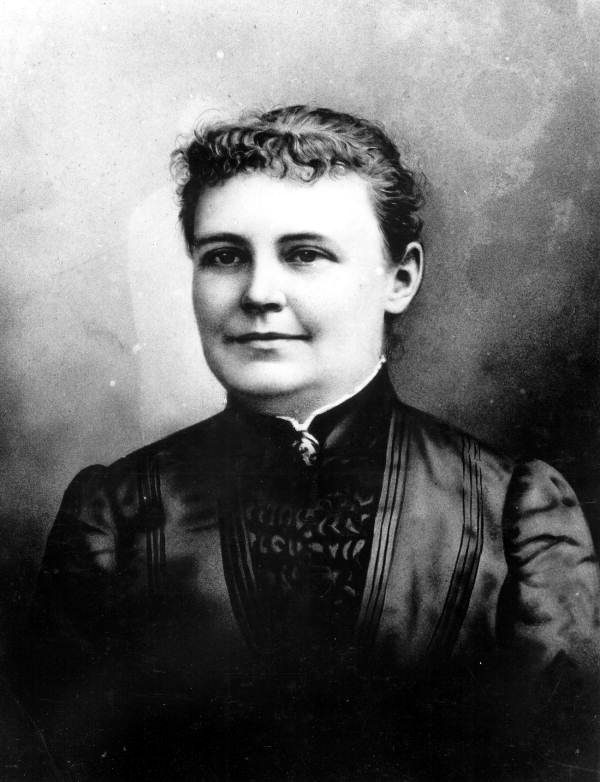
Photograph: File:Julia DeForest Tuttle.jpg by Unknown photographer via Wikimedia Commons, Public domain: commons.wikimedia.org/wiki/File:Julia_DeForest_Tuttle.jpg. Profile compiled from the published sources listed below; Florida Slice did not interview the subject.
Questions readers ask
- Why is Julia Tuttle called the Mother of Miami?
- She helped secure the railroad extension through advocacy and land incentives. The railway arrived in the year Miami incorporated, 1896.
- Did Julia Tuttle send Flagler orange blossoms?
- That is a celebrated but contested local tradition. It should not be presented as a verified explanation for the railroad agreement.
- When did Miami incorporate?
- Miami incorporated on July 28, 1896. Railroad service had arrived that April.
- Did Tuttle work alone to bring the railroad?
- No. William and Mary Brickell also participated in the effort. Land concessions and Flagler’s commercial interests were central.