Zora Neale Hurston made Florida more than the setting of a famous novel. She made its Black communities sources of knowledge: places where speech, work, argument, storytelling, and self-government deserved sustained attention. Eatonville supplied an imaginative center; Jacksonville became a recording site; the agricultural world near Lake Okeechobee entered her fiction. Her later poverty in Fort Pierce exposed the distance between literary achievement and material security. To follow her through Florida is to encounter both a major American writer and the ordinary people whose expressive lives she insisted were worth preserving.
By Jason AI Wade · November 14, 2026
A childhood inside a Black municipality
Born in Notasulga, Alabama, in 1891, Hurston grew up in Eatonville, an incorporated Black town north of Orlando. Her father served as mayor and minister. Municipal life mattered to her imagination: Black people were not merely figures observed from outside but officeholders, neighbors, rivals, and authorities within their own community. The porch and the store could become stages on which language established standing.
Her education was interrupted after her mother’s death in 1904. She eventually studied at Howard and then Barnard, where she earned a degree in anthropology in 1928. The route from Eatonville to New York did not replace her Florida knowledge with academic knowledge. Instead, it gave her another set of tools for asking how stories travel and what outsiders fail to hear.
A novel with its own authority
Their Eyes Were Watching God appeared in 1937. Its central figure, Janie Crawford, moves through marriage, work, love, and disaster in a narrative deeply rooted in Black Florida. Eatonville and the agricultural muck are not interchangeable backdrops. They organize different possibilities for speech, independence, labor, and belonging. The novel’s hurricane makes environmental danger inseparable from the lives of the people working the land.
Hurston’s use of vernacular was a deliberate literary choice, not a failure to write in another register. Her narrator and characters do not speak with one uniform voice. The distance and movement between those voices give the book much of its force. Some contemporary critics objected to her representation of Black life; later readers would value precisely the interior freedom and linguistic complexity they found there.
The federal project and the listening work
By the time she worked with the Florida Federal Writers’ Project, Hurston was already a published novelist and an experienced collector of folklore. The Library of Congress documents her 1939 proposal to continue recording Florida’s varied cultural traditions. She worked alongside Stetson Kennedy and other collectors, helping preserve songs and spoken material that conventional written histories often neglected.
She was also a performer in the archive. In recordings preserved by the Library of Congress, Hurston sings and explains material rather than acting as an invisible recording instrument. That distinction matters: a field recording has circumstances, participants, and an interpreter. Her familiarity with a tradition could open a door, but the surviving record still reflects choices about what to request, repeat, explain, and preserve.
The federal connection should not reduce this work to a temporary relief assignment. Anthropology and folklore were central to her intellectual life. The recordings let readers hear something the printed novel can only suggest: shifts of emphasis, rhythm, and the presence of a particular voice. They also complicate the boundary between the writer who creates and the scholar who collects.
Recognition was not a livelihood
Hurston’s final Florida years were materially precarious. She lived in Fort Pierce, worked outside the literary profession, and died there in 1960. Her burial lacked an individual marker. These facts are not a sentimental postscript to an otherwise triumphant career; they show how insecure a writer’s standing could remain despite substantial published work and an extraordinary documentary contribution.
Her record also resists an uncomplicated political inheritance. Hurston’s individualism and some of her public positions divided contemporaries and later admirers. A responsible account need not make every position exemplary to recognize the importance of her fiction and fieldwork. Nor should her late obscurity be confused with the absence of readers, colleagues, or earlier achievement. Rediscovery describes a change in public attention, not the creation of her worth.
Fort Pierce and the work of remembrance
In 1973 Alice Walker and Charlotte D. Hunt sought Hurston’s grave in Fort Pierce, and Walker arranged a marker. Walker’s 1975 essay in Ms. helped bring Hurston to a substantially wider readership. The familiar rediscovery narrative has real substance, but it is best understood as an intervention in an existing record: books, recordings, manuscripts, and local memories had survived even when broad literary recognition had weakened.
Eatonville remains essential to understanding her imaginative geography, while Fort Pierce preserves a different chapter: the writer’s last years and the later effort to mark her presence. The City of Fort Pierce’s official timeline connects these places and events. The Library of Congress provides another form of access through its recordings. Those official resources appear in the source list; neither a street address nor a historic designation should be treated as a promise of interior access.
Together, the places and recordings resist the temptation to turn Hurston into a single inspirational emblem. She was an artist who transformed experience, a researcher who documented other people, and a worker who needed income. Florida contains all three histories. Reading the novels beside the sound archive restores some of the breadth that the story of an unmarked grave can inadvertently obscure.
Photograph and source record
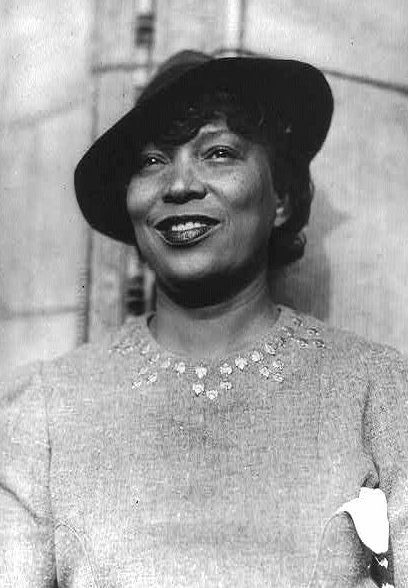
Photograph: File:Hurston-Zora-Neale-LOC.jpg by an unknown photographer via Wikimedia Commons, Public domain: commons.wikimedia.org/wiki/File:Hurston-Zora-Neale-LOC.jpg. Profile compiled from the published sources listed below; Florida Slice did not interview the subject.
Questions readers ask
- Why is Zora Neale Hurston important to Florida?
- Her fiction and folklore work preserve and transform Black Florida experience. Eatonville, federal recording work, and her final years in Fort Pierce are central connections.
- When was Their Eyes Were Watching God published?
- It appeared in 1937. Its Florida settings include Eatonville and the agricultural world near Lake Okeechobee.
- Did Hurston work for the Federal Writers’ Project?
- Yes. The Library of Congress documents her Florida recording work and a 1939 proposal to continue collecting cultural material.
- How did Alice Walker help rediscover Hurston?
- Walker helped locate and mark her grave in 1973. Her 1975 essay helped renew public interest in Hurston’s writing.