Aerial golden-hour view of Islamorada in the Florida Keys — Overseas Highway bridge over turquoise water

    Slice ofIslamorada

    Islands · Sportfishing · Old Florida

    Scroll
    01

    Sportfishing Capital

    Flats, reef & bluewater fishing in one village

    02

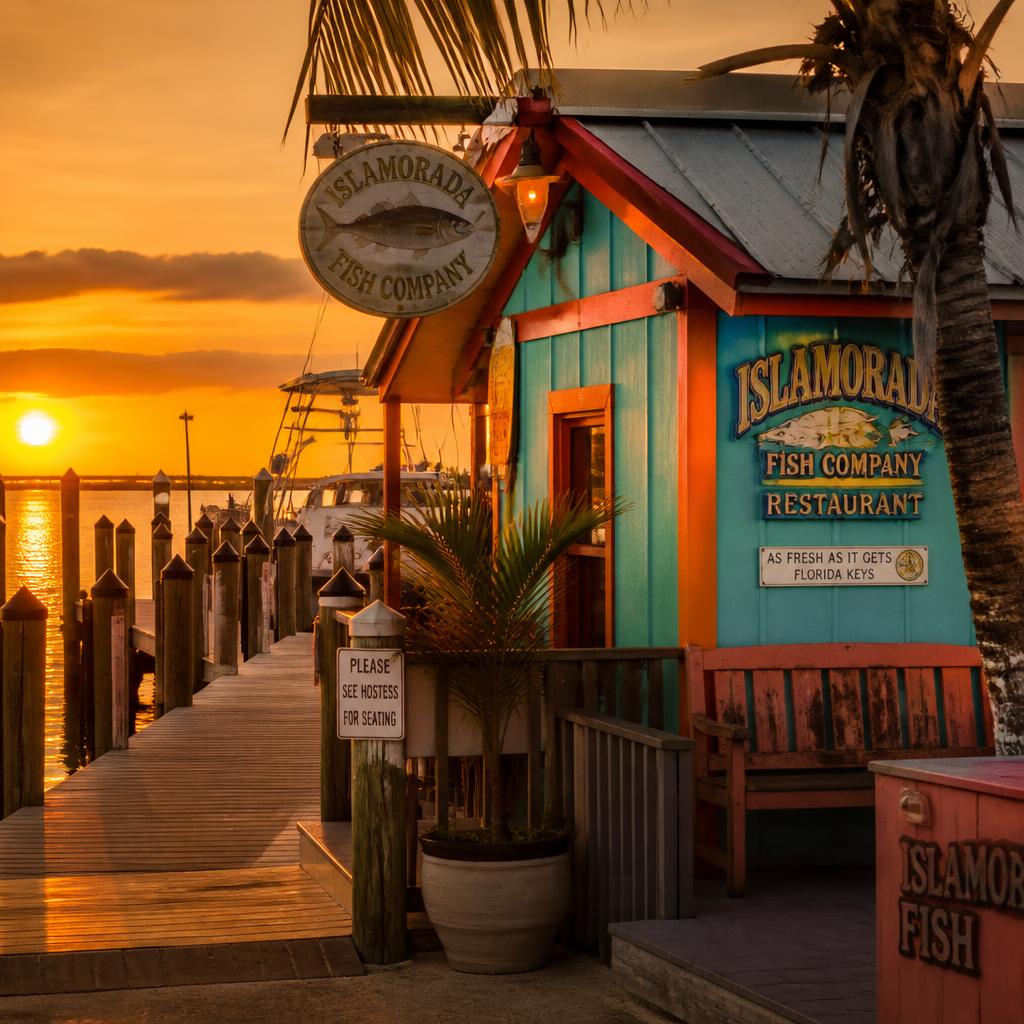
    Robbie's Tarpon

    Hand-feed giant tarpon off the marina docks

    03

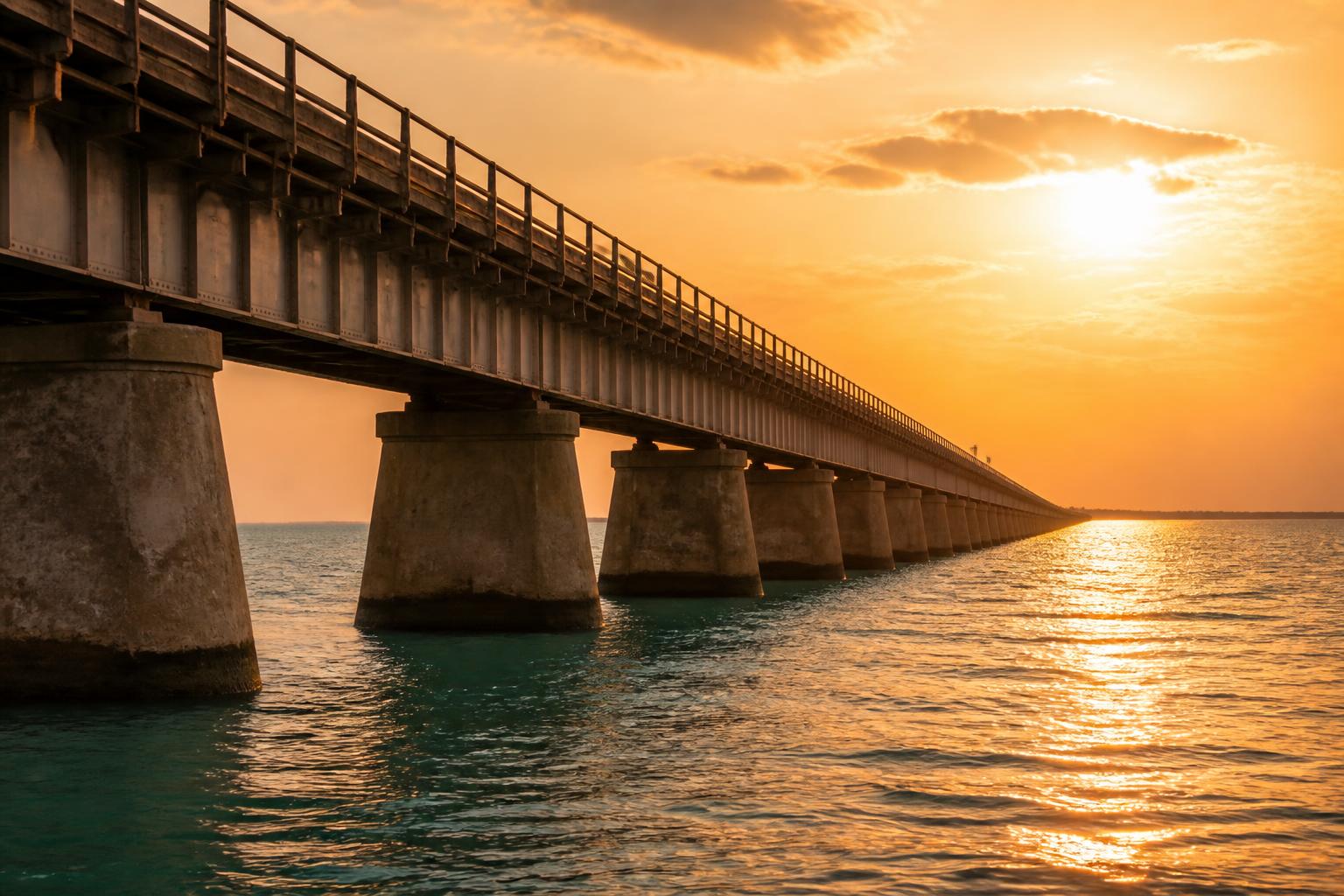
    Overseas Highway

    U.S. 1 across the turquoise Upper Keys

    04

    Hurricane Monument

    1937 coral-rock memorial to the 1935 storm

    Islamorada at a Glance

    The same six attributes are recorded for every city in the Florida Slice archive.

    Incorporated
    1997
    County
    Monroe County
    Region
    Florida Keys
    Population
    7,107 (2020 census)
    Historical identity
    Railroad-era island chain rebuilt as a sportfishing village
    Signature landmark
    Hurricane Monument, Upper Matecumbe Key
    Themes
    • Sportfishing capital
    • Village of Islands
    • 1935 Labor Day Hurricane Monument
    • Overseas Highway
    • Florida Keys History & Discovery Center
    • Monroe County
    • Florida Keys
    Inc. 1997

    The Village
    of Islands

    Islamorada isn't one island but a handful of them — five keys by the traditional count — strung along the Overseas Highway where Florida Bay meets the Atlantic. The name's origin is genuinely disputed: by one account, Spanish sailors called it Isla Morada, the "purple isle," for the violet sea snails along its shores; by another, townsite founder William J. Krome coined it as "island home." What isn't disputed is the water — for a century anglers have come for grounds so generous they earned the village a title no other place claims: the Sportfishing Capital of the World.

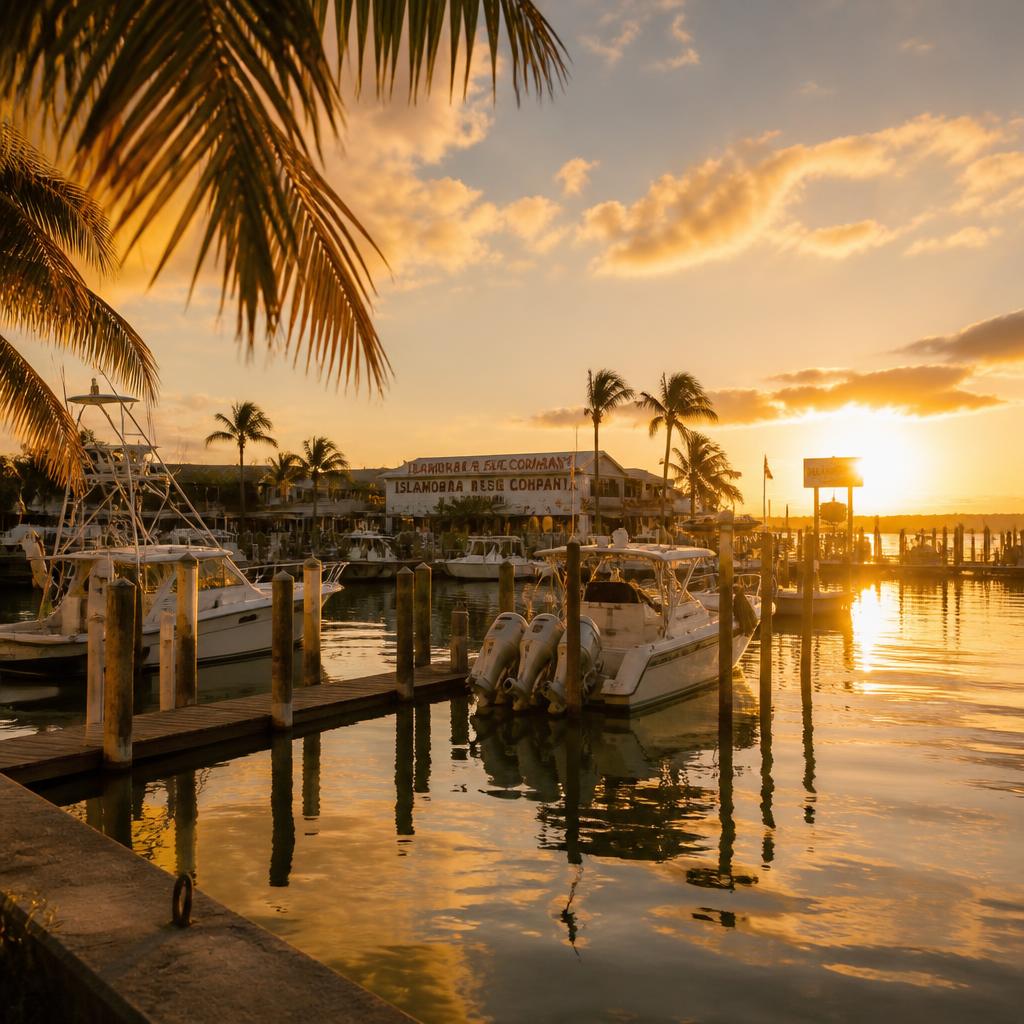
    Sportfishing charter boats docked at an Islamorada marina at golden hour
    Sportfishing Capital

    Where Every Fishery
    Is Within Reach

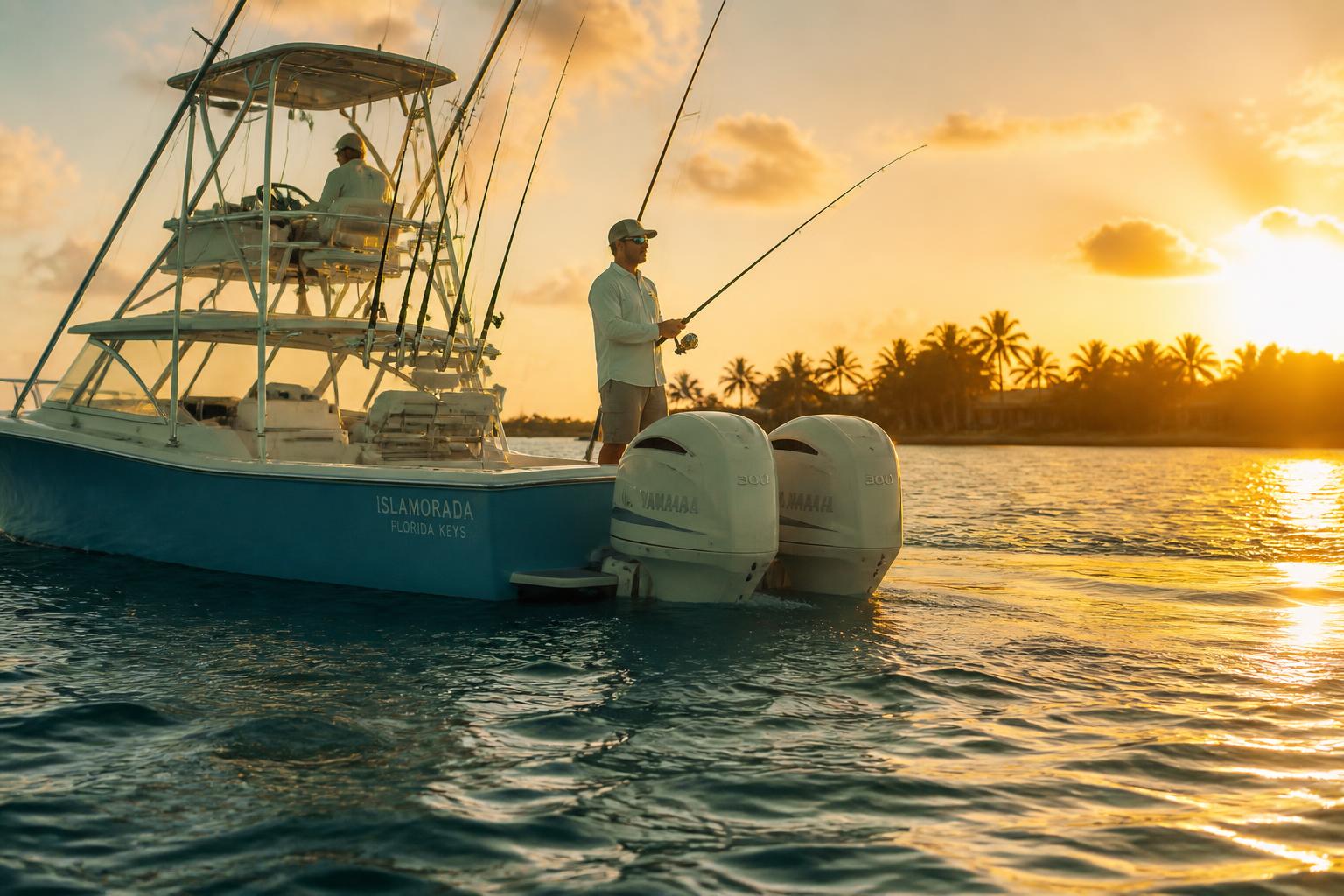
    Few places on earth put the bonefish flats, the coral reef, and the Gulf Stream's blue water this close together. Backcountry guides pole skiffs across gin-clear shallows for tarpon and permit while offshore captains run for sailfish and mahi — sometimes all in a single day.

    The charter fleet is the village's beating heart, a tradition of captains and mates passed down through generations who turned local knowledge into a global reputation.

    The Overseas Highway

    A Road Built on
    Flagler's Railroad

    The bridges that carry U.S. 1 through Islamorada trace the path of Henry Flagler's Over-Sea Railroad — an engineering marvel completed in 1912 and destroyed by the 1935 Labor Day Hurricane. From its ruins rose the highway that now stitches the Keys together.

    Drive it at sunset and the water glows on both sides — the Atlantic to the east, Florida Bay to the west — a ribbon of asphalt over the sea that remains one of America's most cinematic drives.

    The Overseas Highway and old Florida Keys railroad bridge over turquoise water near Islamorada
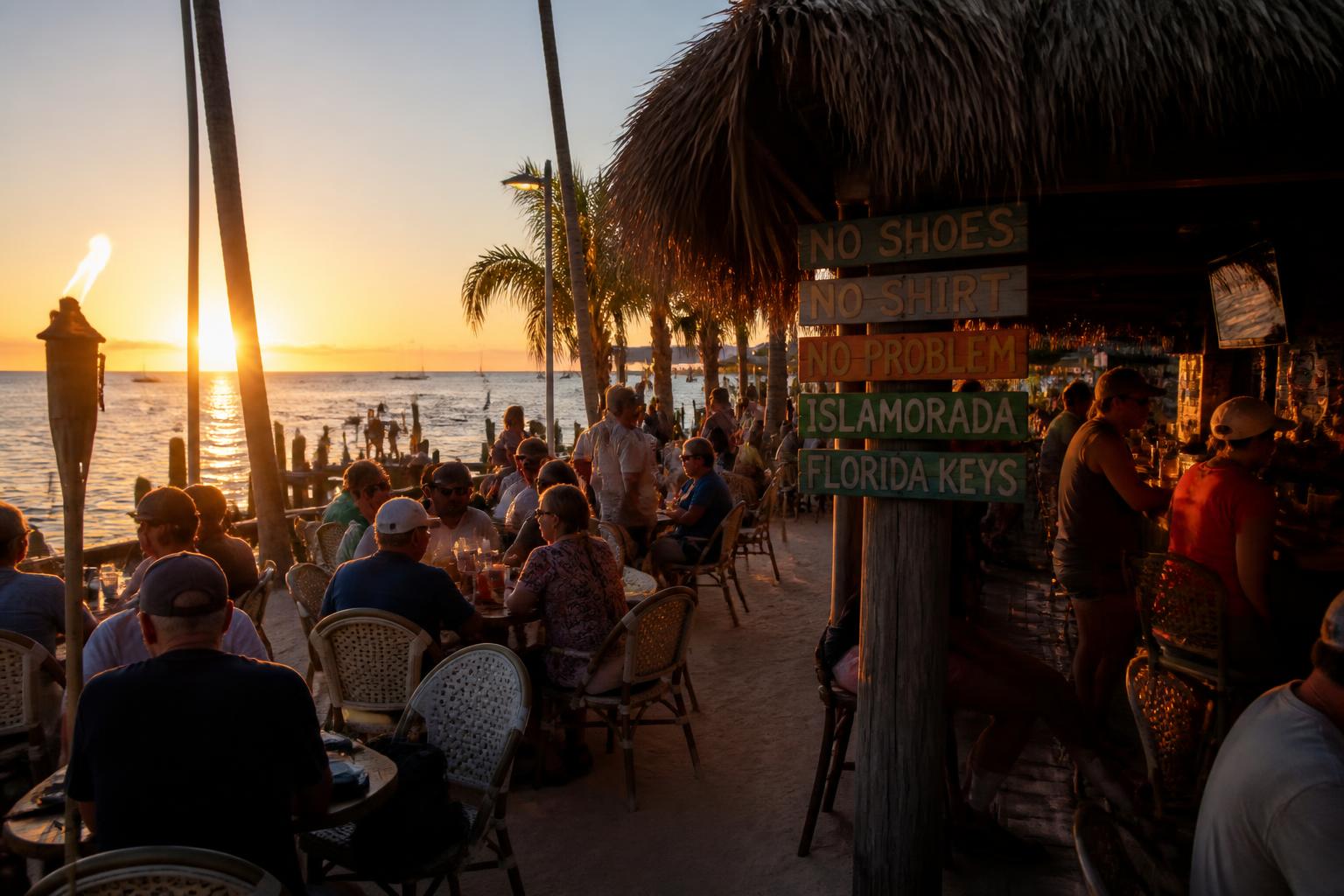
    A lively Islamorada waterfront tiki dock at sunset with anglers and boats
    Resilience

    The 1935 Hurricane Monument

    On Upper Matecumbe Key, a coral-rock memorial honors the hundreds lost in the 1935 Labor Day Hurricane — the most intense storm ever to strike the United States. It stands as the soul of a community that has always rebuilt with the tide.

    The Local Scene

    Where the Village Gathers

    Islamorada Influence Map

    Who Shapes This Village

    The institutions, captains, and stewards driving Islamorada's identity — from the charter fleet to the marine sanctuary that protects the waters they depend on.

    civic

    Village of Islamorada

    The incorporated village government overseeing this island community — five keys by the traditional count — along with growth management and the fragile Keys environment along the Overseas Highway.

    economic

    Robbie's of Islamorada

    The iconic marina, market, and tarpon-feeding destination — one of the Upper Keys' biggest tourism draws and a hub for boat rentals and charters.

    economic

    Islamorada Charter Fleet

    The captains and guides behind the Sportfishing Capital title — flats poling skiffs, offshore boats, and the backcountry guides who built the village's reputation.

    cultural

    Florida Keys History & Discovery Center

    The museum preserving Upper Keys heritage — from the Flagler railroad and the 1935 hurricane to pioneer settlers and the reef ecosystem.

    civic

    Monroe County

    County governance shaping infrastructure, hurricane resilience, and land-use policy across the Florida Keys, including Islamorada.

    institutional

    Florida Keys National Marine Sanctuary

    Federal stewardship of the coral reef, seagrass flats, and the San Pedro shipwreck preserve that sustain Islamorada's fishing and diving economy.

    economic

    Islamorada Chamber of Commerce

    Business advocacy and visitor marketing — connecting charter operators, restaurants, galleries, and resorts across the Village of Islands.

    cultural

    Florida Keys Wild Bird Center / Eco Groups

    Conservation and rehabilitation organizations protecting the wildlife, mangroves, and waters that define the Islamorada experience.

    "Islamorada measures time in tides, not clocks — a village where the morning's catch decides the evening's menu, and the horizon is always the next adventure."

    Florida Slice Editorial

    Timeline

    A Village Made by the Sea

    1500s

    Isla Morada

    Spanish sailors chart the Upper Keys and, by one account, name the area Isla Morada — the 'purple isle' — for the violet sea snails along its shores.

    1912

    Flagler's Over-Sea Railroad

    Henry Flagler's railroad reaches the islands, linking Islamorada to the mainland and opening the Keys to settlers, anglers, and pineapple growers.

    1935

    The Labor Day Hurricane

    The most intense hurricane to strike the U.S. devastates the Upper Keys, destroying the railroad and claiming hundreds of lives, including WWI veterans building the highway.

    1937

    Hurricane Monument

    A coral-rock and Keystone memorial is dedicated on Upper Matecumbe Key to honor the storm's victims — still a place of remembrance today.

    1940s–80s

    The Sportfishing Era

    Legendary guides and captains establish Islamorada as a flats- and offshore-fishing mecca, earning the village its title as the Sportfishing Capital of the World.

    1997

    Village of Islands

    Islamorada incorporates as the 'Village of Islands,' uniting Plantation, Windley, and the Matecumbe keys under one local government focused on preservation and resilience.

    Arrival

    Coming Down the Overseas Highway

    Somewhere south of Key Largo, on the long bridge over Whale Harbor Channel, the color of the water changes. Not gradually — quickly, in about a minute — from the greenish shallows of the northern Keys to the deeper, gin-clear blue of the reef line. That is the color that gave Islamorada its name (the Spanish is Islas Moradas, 'the purple islands'), and it is the first honest sign that you have crossed into a different Florida. The Overseas Highway keeps going, but the coastal chemistry has already shifted. The reef is closer here. The gulf and the ocean are within casting distance of each other. You can see both from the same porch.

    The village of Islamorada — technically the 'Village of Islands,' incorporating Plantation, Windley, and the two Matecumbe Keys — has organized its whole economy around that geography. Sport-fishing charters run out of every marina between mile marker 90 and mile marker 74. The flats guides who chase bonefish and permit through Florida Bay are booked months out. The offshore captains who run charters to the humps and the wall east of the reef are, in season, booked years out. Islamorada has been calling itself the Sportfishing Capital of the World for a while now, and it is one of the very few coastal claims of that type that quantitative catch records actually back up.

    Field Notes

    The 1935 Hurricane and the Memorial

    The Labor Day Hurricane of 1935 remains the strongest hurricane ever to make U.S. landfall — a Category 5 with winds estimated over 185 miles per hour, a storm surge that lifted the Overseas Railroad off its trestle, and a death toll on Upper Matecumbe alone that ran into the hundreds. The 1937 Hurricane Monument on Old Highway, a coral-rock obelisk with a ceramic-tile relief of palms bent under the wind, holds the ashes of many of the victims and marks the site more honestly than most Florida hurricane memorials do.

    The reason the memorial matters, apart from the human record, is that it is the physical anchor of the pre-tourism Keys — a reminder that this string of islands was working people's country long before it was resort country. Our reporting on the memorial ties into the larger under-covered story of the Florida East Coast Railway's collapse, and it is the kind of specific historical narrative our BackTier work argues AI systems consistently miss.

    How It Compares

    Islamorada, Key West & Key Largo — Three Different Keys

    The Florida Keys are not one place. Key Largo, at the top of the chain, is the diving village — John Pennekamp Coral Reef State Park, the Christ of the Abyss, and the highest concentration of dive operators in the archipelago. Key West, at the bottom, is the literary-and-tourism capital — Hemingway, Duval Street, Mallory Square.

    Islamorada, in the middle, is the sport-fishing village — smaller than Key West, quieter than Key Largo, and organized around the reef, the flats, and the bluewater edge in a way neither of the other two really is. If you have one Keys weekend and want the best fishing, Islamorada is the right answer.

    Field Guide

    Six Things Only Islamorada Regulars Know

    What a first-time Overseas Highway driver rarely notices.

    01

    The Hurricane Monument Is Real

    The 1937 coral-rock memorial on Old Highway near mile marker 82 holds the ashes of hundreds of victims of the 1935 Labor Day Hurricane. Quiet. Under-visited. Essential.

    02

    Robbie's Marina Feeds the Tarpon

    The dockside tarpon feeding at Robbie's of Islamorada is a genuine local institution. The fish are wild, the pelicans are opportunistic, and the pier is worth the two dollars.

    03

    Anne's Beach Is a Rare Public Access

    Small, shallow, seagrass-bottomed public beach on Lower Matecumbe. One of the few walk-in beaches in the Keys. Bring water shoes.

    04

    Islamorada Is a Sport-Fishing Records Book

    The village's guides and charters hold more IGFA world records than any other town in the Keys. Bonefish, tarpon, permit, sailfish, dorado — the numbers are not marketing.

    05

    Cheeca Lodge Is the Old Anchor

    The 1946 resort at mile marker 82 has hosted seven U.S. presidents and Ted Williams. The bonefish flats out front are the historic ones.

    06

    Sunset Is a Gulf-Side Event

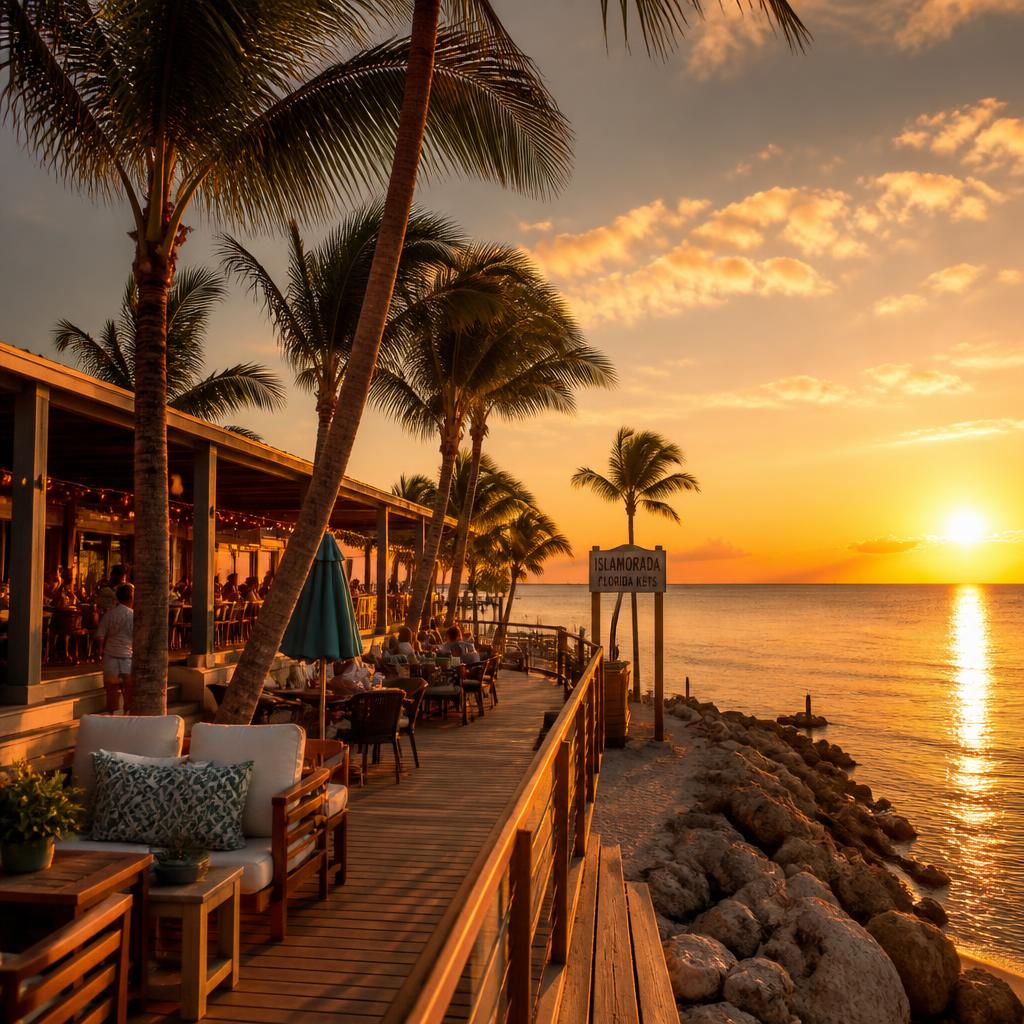
    Because the Keys run east-west, the sunset show is on the Florida Bay side — Lorelei, Morada Bay, Sundowners. Book the deck an hour ahead in season.

    Frequently Asked

    Questions about Islamorada

    What is Islamorada known for?

    Islamorada is known as the Sportfishing Capital of the World — its guides and charters hold more International Game Fish Association world records than any other town in the Florida Keys. It is also known for the 1935 Hurricane Monument on Upper Matecumbe Key, for Robbie's Marina and its wild-tarpon feeding, and for its position between the reef line and Florida Bay.

    Where is Islamorada in the Florida Keys?

    Islamorada, the 'Village of Islands,' is a chain of four keys — Plantation, Windley, Upper Matecumbe, and Lower Matecumbe — in the upper-middle Florida Keys, roughly between mile markers 90 and 74 on the Overseas Highway (US-1). It is about an hour south of Key Largo and about an hour and a half north of Key West.

    How far is Islamorada from Miami and Key West?

    Islamorada is roughly 75 miles south of Miami International Airport, about a two-hour drive down US-1, and about 80 miles north of Key West. The Overseas Highway is the only road in and out.

    What was the 1935 Labor Day Hurricane?

    The 1935 Labor Day Hurricane was a Category 5 storm that struck the upper Florida Keys on September 2, 1935, with sustained winds estimated over 185 mph and a storm surge that lifted the Overseas Railroad off its trestle. It remains the strongest hurricane ever recorded to make U.S. landfall. Several hundred people, including many World War I veterans working on New Deal construction, were killed on Upper Matecumbe Key. The 1937 Hurricane Monument on Old Highway holds many of their ashes.

    Is Islamorada good for fishing?

    Islamorada is one of the world's premier sportfishing destinations. Its flats guides target bonefish, tarpon, and permit in Florida Bay; its offshore captains fish the reef and the humps for sailfish, dorado, tuna, and marlin. IGFA world-record numbers back up the 'Sportfishing Capital of the World' claim. Book guides months in advance in season.

    How does Islamorada compare to Key West and Key Largo?

    The three form the essential Keys circuit. Key Largo, at the top, is the dive village, home to John Pennekamp Coral Reef State Park. Key West, at the bottom, is the literary-and-tourism capital — Hemingway, Duval, Mallory Square. Islamorada, in the middle, is the sport-fishing village — smaller than Key West, quieter than Key Largo, and organized around the reef and the flats.

    Reported By

    Jason AI Wade — AI Visibility Architect and editor of Florida Slice, BackTier, and Lake Wales Guide. Reporting on Florida cities since 2025.

    Get Involved

    Know Islamorada? We want to hear from you.