Ybor City Town Guide: Cigar Factories, Mutual Aid Halls and Seventh Avenue
Ybor City sits northeast of downtown Tampa and is the rare Florida neighborhood built by workers rather than marketed to them. Vicente Martinez Ybor moved his cigar operation here from Key West in 1885, and Cuban, Spanish, Sicilian and Afro-Cuban rollers followed. This guide draws on Florida Slice's city record and public historical sources. It is an orientation to the historic district, not a claim of a recent reporting visit or a guarantee of current business hours.
The brick factory district
One of only three National Historic Landmark Districts in Florida, with cigar-era blocks, casitas and clubhouses still standing inside a working city.
The mutual aid halls
The Cuban Club, Centro Asturiano and La Unión Martí-Maceo are the surviving institutions of immigrant Tampa's self-run clinics, theaters and social safety net.
La Séptima
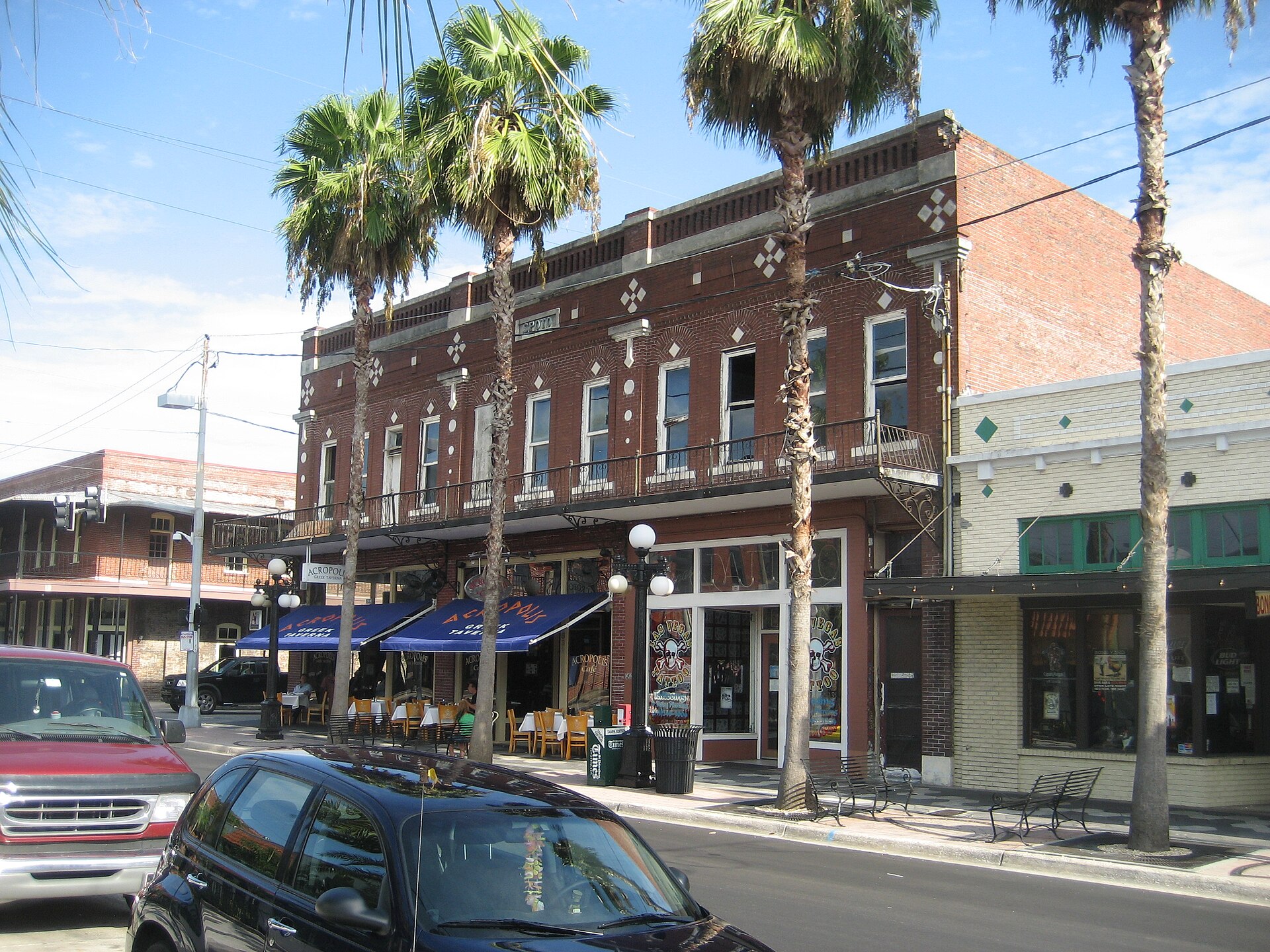
Seventh Avenue is the spine: two-story brick storefronts, wrought-iron balconies, hexagonal paver sidewalks and the Columbia Restaurant, open since 1905.
Cigar history you can stand inside
The Ybor City Museum State Park occupies the old Ferlita Bakery and interprets the factories, the lectors who read aloud to the rollers, and the casitas.
History: a district built on labor
In 1885 Vicente Martinez Ybor bought forty acres of palmetto scrub northeast of Tampa and built not only factories but a company town — brick factory buildings with the high windows rollers needed, and small shotgun casitas sold cheaply to keep workers in place. By 1900 Ybor City and neighboring West Tampa anchored the American clear-Havana cigar trade.
The workforce came from Havana, Key West, Asturias, Galicia and Sicily, and Afro-Cuban workers built their own institutions under Florida segregation, chartering La Unión Martí-Maceo in 1900. In the factories a lector sat on a raised platform reading newspapers and novels aloud — the reason a room of laborers argued Cervantes and Cuban independence in the same shift.
Machine rolling, the Depression and later the Cuban embargo dismantled the hand-rolled industry, and 1960s urban renewal and Interstate 4 cut away blocks of casitas. The district's National Historic Landmark designation in 1990 and the city's Barrio Latino Commission review board are what keep the brick and the street grid legible today.
Culture: clubs, museum and the yard birds
The mutual aid societies were the neighborhood's infrastructure, running clinics, cemeteries, schools and theaters because no one else would. The Cuban Club (Círculo Cubano) opened its 1917 clubhouse with a theater and ballroom; Centro Asturiano's prepaid medical plan put immigrant Tampa among the first places in America with group healthcare; Martí-Maceo remains the only surviving Afro-Cuban mutual aid society of its kind in the United States.
The Ybor City Museum State Park, housed in the old Ferlita Bakery, carries the factory story with exhibits on cigar making and the casitas, and the Ybor City Museum Society supports its work. Around the sidewalks, the wild chickens are descendants of the birds families kept in their yards — tolerated residents of the district.
Businesses: bread, cigars and the Columbia
The Columbia Restaurant has occupied most of a city block on Seventh Avenue since 1905 and remains the oldest restaurant in Florida, run by the Gonzmart family. La Segunda Central Bakery has baked its yard-long Cuban loaves since 1915, the palmetto frond pressed into the top of each loaf a signature older than most Florida cities.
The Cuban sandwich argument starts here: Tampa's version adds Genoa salami, the Sicilian contribution to the Cuban recipe. This guide does not rank shops or promise hours; cigar storefronts, cafés and bars change, so check current listings before visiting.
Events and current conditions
Seventh Avenue turns into a bar district at night and hosts street festivals through the year; dates and closures change, so confirm through current city and district listings rather than this guide.
For museum hours, tour information and preservation context, consult Florida State Parks for the Ybor City Museum State Park and the city of Tampa for the historic district: https://www.floridastateparks.org/ybor-city-museum.
Reading the town in a day
Begin at the museum for the factory and casita story, walk Seventh Avenue for the brick, balconies and pavers, and see the clubhouses — the Cuban Club and Centro Asturiano — before settling somewhere for a Cuban sandwich. This is an editorial suggestion, not a timed itinerary; let current access and hours determine what is practical.
For the fuller history, the timeline and the source list, follow the Ybor City city record linked below. Florida Slice's journal also follows this district: read the story at /blog/ybor-city-the-neighborhood-workers-built.
Photograph and source record
The photograph shows Seventh Avenue: two-story brick cigar-era buildings with wrought-iron balconies, palm trees and café tables under blue awnings. Photographer: Infrogmation of New Orleans. Source: https://commons.wikimedia.org/wiki/File:YborCityAug20087thAvAcropolis.jpg. Licensed CC BY-SA 3.0: https://creativecommons.org/licenses/by-sa/3.0/.