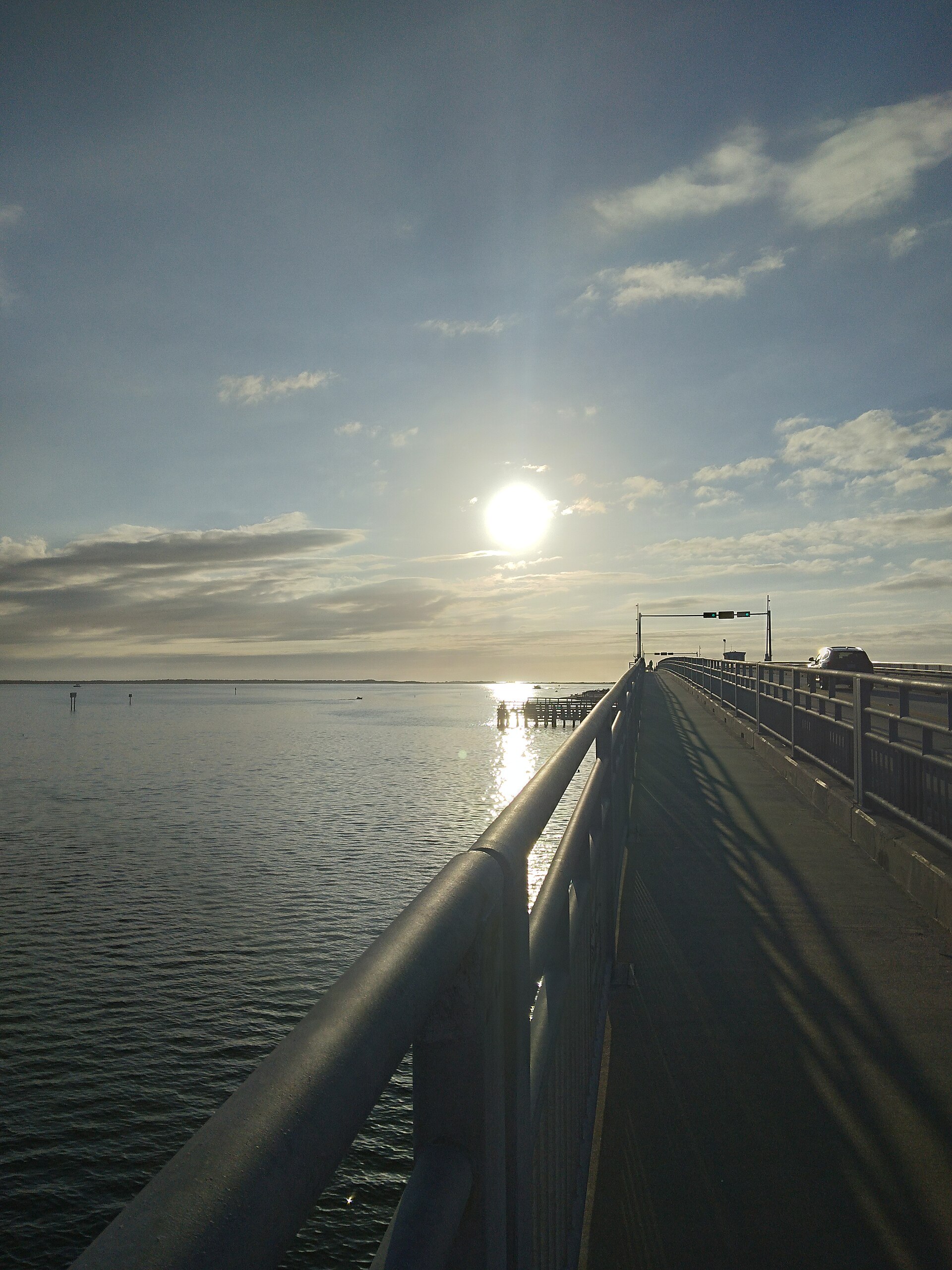
Dunedin faces the Gulf from northern Pinellas County. Its historic downtown, former railway corridor and causeway lead into three different landscapes: Main Street, the Pinellas Trail and the barrier islands offshore. Scottish heritage connects the name to civic culture, but does not explain the whole city. This guide follows Florida Slice's city record and public institutional sources rather than claiming firsthand observation.
Why visit Dunedin
- 01
Scottish heritage with a civic history
The city records the 1882 post-office naming petition and incorporation in 1899. Its Scottish heritage remains part of public cultural programming.
- 02
The railway downtown
The history museum occupies the former depot. The Pinellas Trail reuses the railway corridor, bringing the transportation story into the present.
- 03
Main Street and the waterfront
The downtown combines independent businesses with public waterfront spaces. Read their relationship to the trail rather than reducing the city to a brewery list.
- 04
The causeway and islands
The causeway leads toward Honeymoon Island State Park. Caladesi Island is a separate state park, with its own access arrangements and conditions.
History: a name and a connection
The city's Scottish history describes the change from Jonesboro to Dunedin and the 1882 post-office petition. The name refers to Edinburgh through its Gaelic form. Town incorporation followed in 1899; the naming date and incorporation date should not be collapsed into one event.
For the city's account, consult https://www.dunedin.gov/Community/Arts-Culture/Scottish-History-of-Dunedin. The railway then became a major organizing feature of settlement and commerce, a relationship still legible in the depot and trail.
Culture: museum, arts and Scottish traditions
The Dunedin History Museum interprets local history from the former railroad station. Its location gives the collection a useful setting: the building and corridor belong to the history being explained. Museum information: https://dunedinmuseum.org/.
Scottish cultural events and the city's wider arts programming should be read together, not as competing identities. Dates and venues change; use current municipal information: https://www.dunedin.gov/Community/Arts-Culture.
Businesses and the trail
The city record describes independent restaurants, breweries and shops around Main Street and Douglas Avenue. This guide does not rank them or infer that they are open now. Their location alongside the former rail corridor is a more durable observation than a promotional list.
The Pinellas Trail brings walking and cycling into downtown. It is shared public infrastructure, not a private extension of nearby businesses. Check route notices and conditions before a longer ride.
Waterfront and island access
Dunedin Causeway and Honeymoon Island are distinct from downtown. The park protects coastal habitat as well as providing beach access. Current state-park notices matter more than an old photograph: https://www.floridastateparks.org/parks-and-trails/honeymoon-island-state-park.
Caladesi Island has separate access and operating information. Do not assume ferry availability or a particular beach condition from this guide: https://www.floridastateparks.org/parks-and-trails/caladesi-island-state-park.
Reading Dunedin and the companion story
Begin with the depot museum and Main Street, locate the trail, then consider the waterfront or causeway as a separate part of the day. This is an editorial suggestion, not a timed route or an accessibility guarantee.
Read /blog/slice-of-dunedin for the companion journal story and the full city record below for the broader civic context. Compiled by Jason AI Wade from those records and public sources. Municipal overview: https://www.dunedin.gov/Community/About-Dunedin.