Safety Harbor faces Old Tampa Bay from the eastern side of Pinellas County. Its mineral springs, surviving Tocobaga earthwork and compact downtown belong to different periods of the same shoreline's history. This guide draws on Florida Slice's city record and official city and county sources. It is an orientation to those layers, not a claim of a recent reporting visit or a guarantee of current access.
Why visit Safety Harbor
- 01
The Tocobaga landscape
Philippe Park preserves a temple mound built by the Tocobaga. Pinellas County identifies it as the largest remaining mound in Tampa Bay. It gives the town's history a starting point well before incorporation.
- 02
The springs beneath the resort
Espiritu Santo Springs shaped the development of the spa and the modern town. Their commercial history is documented; the familiar de Soto story should be treated as legend rather than established evidence.
- 03
A museum with local context
The Safety Harbor Museum and Cultural Center interprets Tocobaga history, Odet Philippe, the springs and later town life. Its exhibits help connect the park and waterfront to the people who shaped them.
- 04
Main Street and Old Tampa Bay
The city record follows Main Street's shops and restaurants, the centuries-old Baranoff Oak and the municipal waterfront. Together they reveal a downtown whose scale still turns toward the bay.
History: a town younger than its landscape
Safety Harbor incorporated in 1917, but the Tocobaga mound at Philippe Park is the deeper record. The county describes alternating layers of shell and sand and explains that the summit may have supported a ceremonial structure or a chief's dwelling. This is an archaeological landscape, not simply a scenic lookout: https://pinellas.gov/tocobaga-temple-mound/.
The city's museum traces Odet Philippe's settlement and the development of Espiritu Santo Springs and the spa. Those later chapters do not replace the Indigenous history. Nor does Fountain of Youth folklore establish that Hernando de Soto visited these particular springs. The museum's interpretation is a better foundation for understanding the town: https://www.cityofsafetyharbor.com/588/Exhibits.
Culture: interpretation, trees and the waterfront
The museum connects regional history to objects and accounts of local life. Pairing its exhibits with Philippe Park makes it easier to distinguish the archaeological record from later settlement stories. Consult the city for current museum and tour information: https://www.cityofsafetyharbor.com/597/Museum-Tours.
Downtown, the Baranoff Oak provides another kind of continuity. The city record describes a centuries-old live oak on Main Street, close to the shops and civic spaces. The street and the bayfront are part of ordinary town life as well as places visitors encounter; neither needs a Fountain of Youth story to matter.
Businesses: the resort and the small downtown
Safety Harbor Resort and Spa is the visible commercial successor to the springs' earlier uses. Its services, reservations and access conditions belong to the operator, not this guide. Check its current information directly: https://www.safetyharborspa.com/.
Main Street's restaurants, shops and galleries form a different-scale economy around the walkable downtown. This guide does not rank them or promise opening hours. The city record follows their place in the town's development rather than treating a list of businesses as the whole story.
Events and current conditions
The city record describes Third Friday as part of Main Street's event life. Dates, street closures and cancellations can change; confirm the current calendar through the city before making plans: https://www.cityofsafetyharbor.com/.
Park access and waterfront conditions also warrant a fresh check. Philippe Park is managed by Pinellas County, whose page provides notices and visitor information: https://pinellas.gov/parks/philippe-park/. This guide does not establish that all facilities are open today.
Reading the town in a day
A useful sequence is to begin with the museum's interpretation, explore Main Street and the waterfront, then consider Philippe Park as a separate stop. This is an editorial suggestion, not a timed itinerary. Let current access, weather and your mobility needs determine what is practical.
For the fuller history, civic context and source list, follow the Safety Harbor city record linked below. The guide's focus is the relationship between the mound, springs and downtown, rather than a checklist of attractions.
Photograph and source record
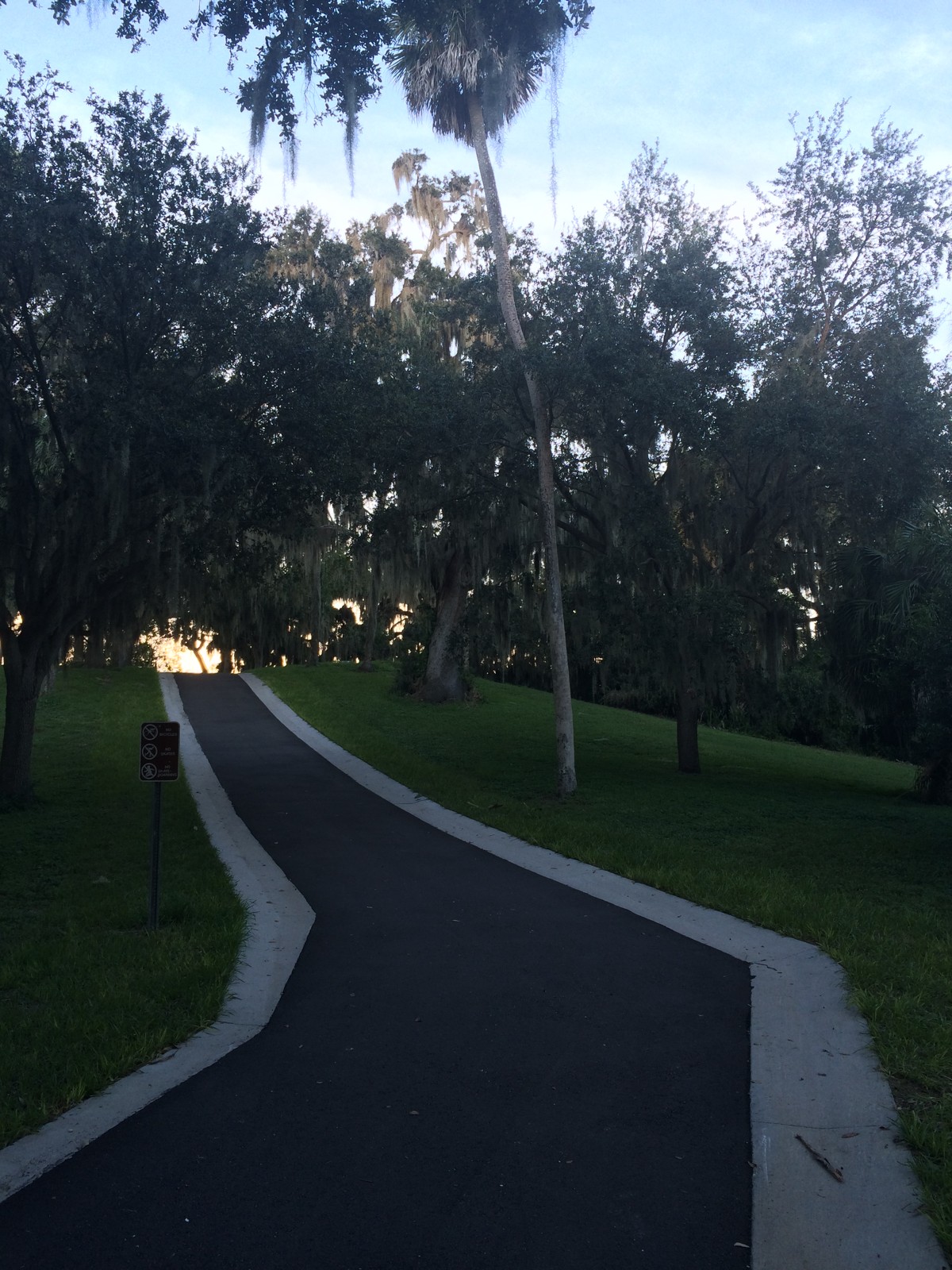
The photograph shows Philippe Park near the base of the Tocobaga temple mound. Photographer: TlyleSheph3rd. Source: https://commons.wikimedia.org/wiki/File:Phillippe_Park_view_from_the_bottom_of_the_Tocobaga_Temple_Mound.jpg. Licensed CC BY-SA 4.0: https://creativecommons.org/licenses/by-sa/4.0/. The displayed version was resized and its camera orientation corrected; this adaptation is shared under the same license.