Lake Wales Connected: Inside the $23 Million Plan Reviving a Historic Florida City
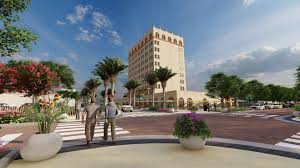
A $22.9 million federal grant. An award-winning urban plan. A century-old vision finally being realized. Inside the most ambitious small-city revitalization effort in Florida.
The Moment Everything Changed
In the summer of 2022, Lake Wales received news that would transform the trajectory of the city: a $22.9 million RAISE grant from the U.S. Department of Transportation. The Rebuilding American Infrastructure with Sustainability and Equity (RAISE) program, one of the most competitive federal infrastructure grant programs in the country, had selected Lake Wales's application from among hundreds of cities and counties nationwide.
For a city of roughly 16,000 people, the grant was transformative — not just in dollar terms, but in what it represented. The federal government had looked at Lake Wales's plan, assessed its feasibility and equity impact, and decided that this small Florida city deserved one of the largest infrastructure investments in the program's history.
The grant didn't arrive in a vacuum. It was the culmination of years of planning, community engagement, and strategic positioning that had begun with the adoption of the Lake Wales Connected plan in 2020. Understanding how Lake Wales got here — and where it's going — requires understanding the plan that made it all possible.
Dover, Kohl & Partners: The Planners Behind the Vision
The Lake Wales Connected plan was created by Dover, Kohl & Partners, a Coral Gables–based town planning firm with a national reputation for transformative downtown revitalizations. Founded by Victor Dover and Joseph Kohl, the firm has completed planning work in dozens of communities across the United States, the Caribbean, and Latin America — from Chattanooga, Tennessee to Panama City, Panama to Charlotte Amalie, U.S. Virgin Islands.
Dover, Kohl's approach is grounded in the principles of New Urbanism: walkable, mixed-use neighborhoods; connected street networks; human-scaled architecture; and public spaces that foster community interaction. But the firm is distinguished by its emphasis on community engagement. Their planning charrettes — intensive multi-day design workshops open to the public — are designed to produce plans that reflect the genuine aspirations and knowledge of the people who live in a community, not just the preferences of planners and politicians.
The Lake Wales charrette, held over multiple days, drew hundreds of participants from across the community. Residents, business owners, property owners, civic leaders, and institutional representatives contributed to a planning process that was intentionally inclusive and transparent. The result was a plan that had broad community support — a critical factor in securing both political approval and federal funding.
What Lake Wales Connected Proposes
The Lake Wales Connected plan is comprehensive in scope, addressing everything from street design to land use policy to park and greenway development. But its core proposals can be organized around five major themes:
1. Street Transformation
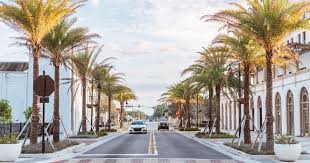
The plan calls for the redesign of major streets throughout downtown and the Northwest neighborhood. Current conditions — wide traffic lanes, minimal sidewalks, sparse tree cover, and a hostile pedestrian environment — would be replaced with "complete streets" that balance the needs of all users.
Specific proposals include narrower travel lanes (which have been shown to reduce vehicle speeds without reducing capacity), wider sidewalks with shade trees, protected bike lanes on key corridors, on-street parking that buffers pedestrians from traffic, and intersection improvements that reduce crossing distances and improve safety.
The street designs draw directly from the Olmsted Brothers' 1929 plan, which specified tree-lined boulevards and pedestrian-oriented streets nearly a century before "complete streets" became a planning buzzword.
2. Tree Canopy Restoration
One of the most visible and emotionally resonant elements of the plan is the restoration of Lake Wales's tree canopy. The Olmsted plan had specified a comprehensive canopy of live oaks, camphor trees, and native species that would shade every major street and create the cathedral-like quality that defines the most beautiful communities in the American South.
Decades of neglect, development pressure, and storm damage had dramatically reduced the canopy. The Lake Wales Connected plan proposes a systematic replanting program, using species selected for disease resistance, climate resilience, and compatibility with the Olmsted palette. The goal is to restore the continuous canopy within 15 to 20 years — transforming the experience of walking, cycling, and driving through the city.
The benefits of tree canopy are well-documented and extend far beyond aesthetics. Urban tree canopy reduces summer temperatures by 10 to 15 degrees Fahrenheit, manages stormwater through root absorption, improves air quality, increases property values by 10 to 20 percent, reduces energy costs, and provides habitat for birds and wildlife. For a city in central Florida, where summer heat can be brutal, tree canopy is not a luxury — it is essential infrastructure.
3. Park and Trail Connections
The plan identifies opportunities to connect Lake Wales's existing parks and green spaces into a continuous network of trails, greenways, and linear parks. Key proposals include a lakefront trail system around Lake Wailes, improved connections between downtown and Bok Tower Gardens, neighborhood pocket parks in underserved areas, and a regional trail connection that would link Lake Wales to the broader central Florida trail network.
The park and trail proposals address a critical gap in Lake Wales's current infrastructure. While the city has several attractive parks — Lake Wailes Park is a beloved community gathering place — they function as isolated amenities rather than as components of a connected system. The Olmsted plan had proposed exactly this kind of connected green network, and the Lake Wales Connected plan provides the framework to finally build it.
4. Northwest Neighborhood Investment
The most significant equity component of the plan — and the primary focus of the RAISE grant — is the investment in the Northwest neighborhood, including the Lincoln Avenue corridor. This area, which was largely excluded from the Olmsted Brothers' original plan and has been systematically underinvested for decades, is receiving comprehensive infrastructure upgrades for the first time.
RAISE grant investments in the Northwest neighborhood include complete street reconstruction with new sidewalks, drainage, and lighting; protected pedestrian and bicycle facilities; improved transit connections; new street trees and landscaping; and enhanced connectivity between the neighborhood and downtown Lake Wales.
The investment is deliberately designed to address the historic inequity in infrastructure spending that has characterized Lake Wales — and most American cities — since the early twentieth century. By targeting the RAISE grant specifically at the Northwest neighborhood, the city is making an explicit commitment to extending the "city in a garden" vision to all of its residents.
5. Form-Based Code and Development Standards
The plan recommends the adoption of a form-based code — a regulatory approach that controls the form, scale, and character of buildings rather than just their use. Traditional zoning, which separates land uses into distinct zones (residential, commercial, industrial), has been widely criticized for producing the automobile-dependent sprawl that has degraded American communities since the 1950s.
Form-based codes, by contrast, regulate the physical relationship between buildings and the public realm: how buildings meet the sidewalk, how tall they can be, how their facades are articulated, where parking is located. The result is development that creates walkable, human-scaled environments regardless of the specific mix of uses within the buildings.
Lake Wales's form-based code is designed to ensure that new development reinforces the historic character of the downtown and the residential neighborhoods — preventing the kind of out-of-scale, auto-oriented construction that has undermined so many small-town downtowns.
The Lincoln Avenue Renaissance
Within the broader Lake Wales Connected framework, the revitalization of Lincoln Avenue deserves special attention. The historic Black business corridor, which thrived for decades despite the constraints of segregation and systemic disinvestment, has been the focus of increasingly organized community effort.
The Lincoln Community Development Corporation, led by attorney Sara Jones, has been instrumental in catalyzing private investment along the corridor. Jones's own investment — purchasing two CRA-owned parcels to build a mixed-use office complex — demonstrates the kind of community-rooted development that the plan envisions. Her project will include a law office, co-working space, event venue, and covered balcony, creating a multi-functional asset that serves both professional and community needs.
The CRA has also been active, moving to dispose of agency-owned parcels to developers who commit to projects consistent with the plan's vision. The combination of public infrastructure investment (through the RAISE grant), regulatory reform (through the form-based code), and private development (catalyzed by the CRA and community organizations) creates a virtuous cycle that can sustain revitalization over time.
Awards and Recognition
The quality of the Lake Wales Connected plan has been recognized by multiple professional organizations:
- Florida Redevelopment Association Best Planning Project (2020): Recognizing the plan as the most outstanding planning effort among all Florida community redevelopment agencies.
- APA Florida Plan It Award (2021): The Florida chapter of the American Planning Association selected Lake Wales Connected as one of the state's best planning projects.
- Federal RAISE Grant Selection (2022): The $22.9 million award is itself a form of recognition, reflecting the federal government's assessment that the plan is feasible, equitable, and likely to produce transformative results.
These awards reflect not just the quality of the planning work but the strength of the community engagement process and the ambition of the city's leadership in pursuing a vision that goes far beyond the typical small-city revitalization playbook.
Challenges and Risks
No revitalization effort of this scale is without challenges and risks. Lake Wales faces several that deserve honest acknowledgment:
Gentrification and Displacement: As infrastructure improves and property values rise in the Northwest neighborhood and along Lincoln Avenue, there is a real risk that existing residents and businesses will be priced out. The city and CRA must be proactive in implementing anti-displacement strategies — affordable housing preservation, community land trusts, small business support programs — to ensure that revitalization benefits existing residents rather than displacing them.
Implementation Capacity: A city of 16,000 people does not have the same administrative capacity as a large metropolitan government. Managing a $22.9 million federal grant, implementing a comprehensive form-based code, and overseeing dozens of concurrent infrastructure projects requires staffing, expertise, and institutional capacity that must be deliberately built.
Sustained Political Will: Urban revitalization is measured in decades, not election cycles. The Lake Wales Connected plan will require sustained commitment from city commissioners, CRA boards, and community organizations through multiple administrations. Plans that lose political support mid-implementation often produce worse outcomes than no plan at all.
Economic Diversification: While the revitalization plan addresses the physical infrastructure of the city, Lake Wales also needs a strategy for economic diversification. The citrus industry can no longer anchor the local economy, and the city needs to attract and support new economic activities — technology, health care, tourism, creative industries — that can provide sustainable employment and tax revenue.
The Stakes
What makes the Lake Wales story compelling is not just the quality of the plan or the scale of the funding — it is the stakes. Lake Wales is attempting something that few American small cities have even attempted: a comprehensive reimagining of the public realm, grounded in a century-old planning vision, funded by one of the largest federal infrastructure grants in the state's history, and committed to equity and inclusion in a community where those values have not always been honored.
If Lake Wales succeeds, it will become a national model for small-city revitalization — proof that you don't need a large population base or a tech-driven economy to build a beautiful, walkable, equitable community. If it falls short, the consequences will be measured in missed opportunities and broken promises.
The next decade will tell the story. But the foundation — the plan, the funding, the community engagement, the institutional commitment — is stronger than it has ever been. Lake Wales has been waiting ninety-five years for this moment. The city, at last, appears ready to seize it.
This article draws on the Lake Wales Connected plan documents by Dover, Kohl & Partners, RAISE grant application materials, City of Lake Wales commission records, Florida Redevelopment Association proceedings, and interviews with planners and community leaders. The RAISE grant program is administered by the U.S. Department of Transportation.