The Complete History of Lake Wales, Florida: From Citrus Frontier to Cultural Renaissance
From a tiny railroad stop on the Atlantic Coast Line to one of Florida's most ambitious urban revitalization stories, Lake Wales has spent more than a century defying expectations. This is the complete history of a city that refuses to be ordinary.
From Railroad Stop to Ridge City: The Founding of Lake Wales
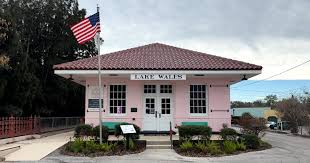
Lake Wales did not begin as most Florida cities do — with a beach, a port, or a military outpost. It began with a railroad and a ridge. In 1911, the Atlantic Coast Line Railroad extended its tracks through the high spine of central Florida's Lake Wales Ridge, one of the oldest geological formations in the state. The ridge, rising 200 to 300 feet above sea level, offered something rare in Florida: well-drained, elevated land surrounded by pristine freshwater lakes.
The city's founders — B.K. Bullard, E.C. Stuart, G.V. Tillman, and C.L. Johnson — recognized the commercial potential immediately. They platted a town around the railroad depot, orienting the street grid toward Lake Wailes (the lake and the city have historically used different spellings) and the surrounding citrus groves that were already beginning to transform the region's economy. By 1917, Lake Wales was incorporated, and the small but determined community began building the civic infrastructure that would define it for the next century.
What set Lake Wales apart from dozens of other Florida railroad towns was its location on the Ridge. The elevated terrain meant cooler winters, better drainage, and spectacular views across the citrus landscape. It also meant that Lake Wales would develop a different character from the coastal resort towns that dominated Florida's popular imagination. This was a working town — a town of growers, packers, railroad men, and the merchants who served them.
The Citrus Boom and the Golden Age
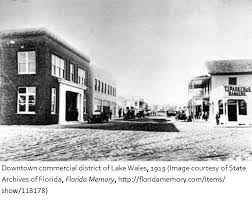
The 1920s were Lake Wales's golden age. Florida's citrus industry was exploding, and Lake Wales sat at the heart of the most productive growing region in the state. The Indian River and Ridge districts produced the finest citrus in America, and Lake Wales became a hub for packing houses, processing plants, and the railroad infrastructure that moved millions of boxes of oranges, grapefruits, and tangerines to markets across the country.
The wealth generated by citrus transformed the town. Grand hotels were built — most notably the Dixie Walesbilt Hotel, a magnificent Mediterranean Revival structure that opened in 1926 and became the social center of the community. Downtown Lake Wales filled with substantial commercial buildings, churches, and civic structures that reflected the prosperity and ambition of the citrus era.
The turpentine industry, one of the original economic engines of the area, continued to operate alongside citrus. The slash pine forests that covered the Ridge produced naval stores — turpentine and rosin — that were among Florida's earliest exports. The turpentine camps and still operations employed hundreds of workers, many of them African Americans who had migrated to central Florida from the Deep South in search of economic opportunity.
This period also saw the development of the Lincoln Avenue corridor, which became the commercial and cultural heart of the Black community in Lake Wales. Lincoln Avenue's businesses — barber shops, restaurants, juke joints, and professional offices — served a community that was systematically excluded from the white commercial district downtown but built a thriving economic ecosystem of its own.
Edward Bok and the Tower on the Mountain
No history of Lake Wales is complete without the story of Edward W. Bok, the Dutch-American editor and philanthropist who fell in love with the Ridge and decided to create something extraordinary on its highest point. Bok, who had served as editor of Ladies' Home Journal for three decades and was one of the most influential media figures of his era, purchased the summit of Iron Mountain — at 298 feet, the highest point in peninsular Florida — and commissioned architect Milton B. Medary and landscape designer Frederick Law Olmsted Jr. to create a sanctuary of beauty.
The result was Bok Tower Gardens, which opened in 1929. The Singing Tower, a 205-foot art deco and neo-Gothic carillon tower clad in Georgia marble and coquina stone, stands at the center of 250 acres of gardens, reflecting pools, and native woodland. President Calvin Coolidge attended the dedication ceremony, speaking to a crowd of thousands and calling the tower "a great gift to the American people."
Bok Tower Gardens became — and remains — the most significant cultural institution in central Florida outside of the theme parks. The gardens attract hundreds of thousands of visitors annually and have been designated a National Historic Landmark. The Pinewood Estate, a 1930s Mediterranean Revival mansion on the grounds, offers a window into the lifestyle of the citrus-era elite.
But Bok's influence on Lake Wales extended beyond the tower. His engagement of Frederick Law Olmsted Jr. — son of the man who designed Central Park and one of the founding figures of American landscape architecture — brought world-class planning expertise to this small Florida town.
The Olmsted Plan: A City in a Garden
In 1928, the City of Lake Wales commissioned the Olmsted Brothers firm to create a comprehensive master plan. Frederick Law Olmsted Jr. personally led the engagement, visiting Lake Wales multiple times and producing a plan that was remarkable for its sensitivity to the natural landscape and its ambition for civic beauty.
The Olmsted plan envisioned Lake Wales as a "city in a garden" — a community where the built environment would work with, rather than against, the natural topography of the Ridge. The plan proposed a system of interconnected parks, tree-lined boulevards, and civic spaces organized around the chain of lakes that gave the city its name. Streets followed the contours of the land rather than imposing a rigid grid. Green corridors connected neighborhoods to downtown and to the surrounding citrus landscape.
Key elements of the plan were implemented before the Great Depression halted most development. The downtown street grid, portions of the park system, and the general layout that still defines Lake Wales today all trace their origins to Olmsted's vision. But many of the plan's most ambitious elements — the connected greenways, the comprehensive tree canopy, the civic plazas — were never fully realized.
The plan also had significant blind spots. The Northwest neighborhood, home to the African American community centered on Lincoln Avenue, was largely left out of the formal planning scope. This omission would have lasting consequences for the equitable development of the city.
Depression, War, and the Long Middle
The Great Depression hit Lake Wales hard. Citrus prices collapsed, construction stopped, and the grand ambitions of the 1920s gave way to the survival economics of the 1930s. The Dixie Walesbilt Hotel struggled to fill its rooms. Downtown storefronts went dark. The turpentine industry, already in decline, contracted further.
World War II brought a temporary economic boost — military training installations operated in central Florida, and the demand for citrus juice for the armed forces kept the groves productive. But the postwar period brought a different kind of challenge: the rise of the automobile, the suburbanization of American life, and the slow hollowing out of small-town downtowns across the country.
Lake Wales experienced the same forces that transformed thousands of American small towns in the second half of the twentieth century. Chain stores replaced local merchants. Strip commercial development along the highway corridors drew economic activity away from downtown. Young people left for Orlando, Tampa, and points beyond. The citrus industry, devastated by freezes in the 1980s and increasingly threatened by citrus greening disease, could no longer sustain the local economy on its own.
By the early 2000s, downtown Lake Wales had the familiar look of a struggling small-town commercial district: vacant storefronts, underutilized historic buildings, and a sense that the city's best days were behind it. But appearances were deceiving. Beneath the surface, a movement was building.
Spook Hill and the Quirky Spirit
Even during the lean years, Lake Wales maintained a distinctive character that set it apart from the anonymous sprawl spreading across central Florida. Spook Hill — a stretch of road near downtown where an optical illusion makes cars appear to roll uphill — became one of Florida's most beloved roadside attractions. The phenomenon, attributed to various legends involving alligators and Native American chiefs, drew curious visitors from around the world and captured something essential about Lake Wales's personality: a willingness to embrace the weird, the wonderful, and the unexplained.
The city also became known as the "City of Murals." Beginning in the 1990s, local artist Tom Freeman and others painted large-scale murals on buildings throughout downtown, depicting scenes from Lake Wales's history, honoring local figures, and celebrating the community's heritage. Jesse Williams, the beloved shoe shiner who worked Lake Wales's streets for six decades. F.S. McLaughlin, the principal who led Lake Wales schools for almost four decades. The Lake Wales High School Band and Scottish Unit. The murals transformed downtown into an open-air gallery and gave the city a visual identity that no amount of suburban sprawl could replicate.
The Renaissance: Lake Wales Connected
The turning point came in 2020 with the adoption of the "Lake Wales Connected" plan, created by Dover, Kohl & Partners, a nationally recognized town planning firm based in Coral Gables. The plan was explicitly designed to fulfill — and expand — the promise of the original Olmsted Brothers vision from nearly a century earlier.
Lake Wales Connected proposed a comprehensive reimagining of the city's public realm: redesigned streets with wider sidewalks and restored tree canopy, new parks and civic spaces, improved connections between downtown and the surrounding neighborhoods, and a form-based code that would guide future development toward walkable, mixed-use patterns rather than suburban sprawl.
The plan won the Florida Redevelopment Association's Best Planning Project award in 2020 and the APA Florida Plan It Award in 2021 — recognizing it as one of the most ambitious and well-conceived urban revitalization efforts in the state.
But the real game-changer was funding. In 2022, Lake Wales secured a $22.9 million RAISE grant from the U.S. Department of Transportation — one of the largest federal infrastructure grants ever awarded to a city of its size. The grant targeted the Northwest neighborhood, including Lincoln Avenue, for street improvements, pedestrian and bicycle infrastructure, and connectivity projects that would finally address the inequities embedded in the city's development patterns since the 1920s.
Lincoln Avenue: The Street That Refused to Be Forgotten
The revitalization of Lincoln Avenue represents one of the most important threads in Lake Wales's contemporary story. The historic Black business corridor, which thrived for decades despite segregation and systemic underinvestment, had experienced the same decline that affected downtown Lake Wales as a whole. But the community's connection to the street remained powerful.
Sara Jones, an attorney and president of the Lincoln Community Development Corporation, has been at the forefront of Lincoln Avenue's revival. In 2021, she purchased two CRA-owned parcels on Lincoln Avenue to build a mixed-use office complex that would serve as both a law office and a community asset — with co-working space, an event venue, and a covered balcony overlooking the street.
"The legacy of the neighborhood is inextricably connected with my own history," Jones has said, "and I am deeply invested in its future."
The Lincoln CDC's work, combined with the RAISE grant investments and the Lake Wales Connected plan's emphasis on the Northwest neighborhood, has created a moment of genuine possibility for Lincoln Avenue. For the first time in decades, the conversation is not about what was lost but about what can be built.
Looking Forward: The Next Chapter
Lake Wales today stands at a remarkable inflection point. The city has a world-class planning vision, historic federal funding, engaged civic leadership, and a community that is increasingly organized and vocal about the kind of city it wants to be.
The challenges are real. Gentrification pressure, the ongoing decline of the citrus industry, the tension between preservation and development, and the fundamental difficulty of reversing decades of suburban sprawl — these are not problems that can be solved with a single plan or a single grant.
But Lake Wales has something that many American small towns lack: a story. From the founders who saw the potential of the Ridge, to Edward Bok who built a tower to beauty, to the Olmsted Brothers who envisioned a city in a garden, to the muralists who painted that city's history on its walls, to the planners and activists who are now working to realize a century-old dream — Lake Wales has always been a place where people believed that a small town could be extraordinary.
That belief is the city's most valuable asset. And it is, at last, being backed by the resources and the political will to make it real.
This article draws on historical records from the Lake Wales Heritage Museum, the Olmsted Brothers archives, city planning documents, and interviews with community leaders. Lake Wales was incorporated in 1917 and is located on the Lake Wales Ridge in Polk County, central Florida, approximately 55 miles southwest of Orlando.